ملازم ووزاريات الثالث المتوسط
- 0.0
- Rating
- 10.00K
- Installs
- Free
- Price

 Analysis by App-foxy
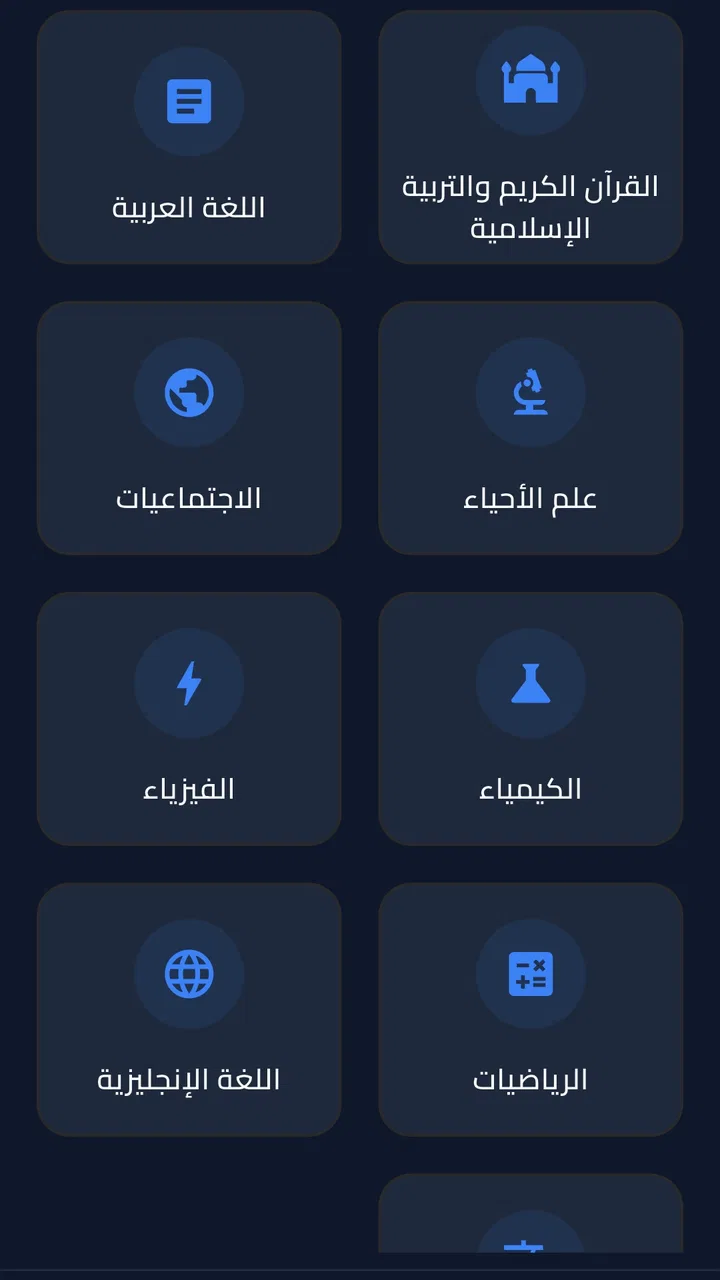
For Iraqi students in the third intermediate stage, revision often means moving between school notes, ministerial questions, and whatever study material is available at the moment. ملازم ووزاريات الثالث المتوسط is built around that particular need rather than around general reading or entertainment. I found it most useful as a focused study reference: something to open when I want to check a lesson, review a notebook, or remind myself what kind of material belongs to this stage.
This is a free Android app in the Comics category, developed by Ahmed KHWERT. Its audience is clearly Iraqi students, and the Everyone age rating makes it suitable for a broad range of users. The app has passed the early discovery stage with over ten thousand installs, although its displayed average rating is currently zero, so I would not use the rating alone to judge whether it fits your study routine.
My overall impression is practical but limited. The app’s value depends less on entertainment or elaborate presentation and more on whether its study pages are easy for you to read and return to. If you want a compact place for third intermediate notebooks and ministerial material, it is worth trying. If you need a full learning platform with explanations, exercises, progress tracking, or interactive teaching, you should treat this as a supplement rather than a complete replacement for your usual resources.
You May Also Like

 Blood Strike: 2.5 Anniversary
Blood Strike’s Loadouts Turn Every Drop Into a Tactical Gamble
A close look at Blood Strike’s custom loadouts: how fast access to signature weapons reshapes its battle royale rhythm, rewards preparation, and narrows the gap between fights.

 Pandora - Music & Podcasts
Pandora’s Music Is Easy to Start, but Harder to Recover
Pandora’s strength is its low-effort path from a seed to a station. Its weak spot is how much confidence it asks you to place in connection, setup, and quiet recovery.

 8 Ball Pool
 Is Built on Rivalries, Rematches, and Routine
A close look at the rivalries, rematches, shared routines, and unanswered safety questions that turn a quick pool match into a persistent mobile community.

 Samsung Music
’s Quiet Strength Is Playing What You Already Own
Its reach comes less from spectacle than from dependable access to a personal library. That simplicity is both the app’s strongest retention engine and its ceiling.

 AccuWeather: Weather Radar
AccuWeather Review: A Quick, Clear Forecast for Everyday Decisions
For everyday plans, the best forecast is the one you can understand quickly. AccuWeather makes rain timing, radar, and local conditions easy to act on, with a few trade-offs.

 Hill Climb Racing
Why Hill Climb Racing Still Turns Crashes Into One More Run
A tiny car, a bumpy hill and one more upgrade: Hill Climb Racing keeps resurfacing because its simple chaos makes every near-miss feel personal.
More From Our News Desk



How the study material feels to use
I find the material easiest to judge by giving it a specific job: helping me return to a lesson or ministerial topic without turning a short study break into an aimless search. That focused use also makes it clearer where a reference app can help and where I still need another explanation. Next, I look at how that approach fits into an ordinary revision session.
Readability and navigation matter more than decoration
When I use an educational reference app, I care first about how quickly I can reach the page I need. A student usually opens this kind of tool with a specific purpose: checking a topic before homework, revising a section during a short break, or looking over ministerial material before an exam. Every extra step makes that moment less useful. The central appeal here is that the app is aimed at a defined school level instead of trying to serve every learner at once.
That narrow focus can make the experience less confusing for its intended audience. A third intermediate student is not forced to search through unrelated university subjects, children’s lessons, or general articles. I would approach it as a subject reference, not as a course that guides me from one lesson to the next. That distinction is important because the app’s usefulness comes from finding and reading relevant material, while the responsibility for planning revision remains with me.
For comfortable reading, I would use the app in a quiet place and give myself enough time to inspect the page rather than rushing through it. Study documents can become tiring when the writing is dense, when a page contains several sections, or when the reader has to move back and forth between a question and its related notes. A simple personal habit helps: I read one small section, close the app mentally by summarizing it, and then return to check the details. This turns a reference screen into an active revision tool.
The most useful way to approach this app is as a quick-check library, not as a teacher. I would not open it expecting a lesson plan, spoken guidance, or a sequence that tells me what to study next. Instead, I would decide the topic before opening it. That small change saves time and prevents aimless scrolling, especially when I am revising several subjects in the same evening.
Reading comfort depends on the student and the material
Students do not all read in the same way. Some are comfortable with compact pages and can scan headings quickly. Others need larger text, stronger separation between sections, or more time to process a page. Because the app is centered on notebooks and ministerial material, I would judge it by how well its pages work for my own eyes and concentration rather than assuming that one layout suits everyone.
A useful routine is to test the app during a short study session before relying on it for a long revision period. I would open one familiar topic, read a page at the normal distance I use with my phone, and then try to locate a particular point again. If that feels easy, the app may fit my reading habits. If I lose my place or feel eye strain quickly, a printed notebook, a larger screen, or another source may be more comfortable for extended study.
This is also where the difference between browsing and learning becomes clear. A student can recognize a familiar heading without truly remembering the explanation. I would therefore avoid simply swiping through pages and calling that revision. After reading a section, I would put the phone down and write a few words from memory. Then I would reopen the material to correct gaps. That workflow uses the app for checking while keeping the actual recall work active.
Navigation for different abilities
For students who prefer a straightforward visual reference, the focused subject area is a positive starting point. Someone who already knows the name of a lesson or the kind of ministerial material they need may reach the right content more easily than they would through a broad web search. On the other hand, students who need strong guidance, audio explanation, or carefully staged instruction may find the experience demanding because reference material does not automatically explain itself.
I would also be cautious about using the app as the only resource for a learner who has difficulty reading dense screens. In that situation, a printed copy with personally marked sections, a larger display, or help from a teacher may provide better control. The app can still be useful as a second reference, but convenience should not be confused with full accessibility. A digital page is not automatically easier to understand than a paper page.
Motor and sensory considerations during revision
Phone-based study has a practical advantage for students who already handle a touchscreen comfortably: the material can be kept close and checked without carrying a separate notebook. That can help during a short waiting period or while moving between home and school. However, reading on a small device may require repeated scrolling, tapping, or repositioning. For anyone with limited fine-motor control, hand fatigue, or difficulty making precise touches, those small actions can become a real barrier over time.
I would reduce that friction by placing the phone on a stable surface instead of holding it throughout the session. A stand or a simple support lets me keep both hands relaxed and makes it easier to pause, take notes, or compare the screen with a paper exercise book. This is a small adjustment, but it changes the app from something I constantly grip into something I can consult at my own pace.
Students who are sensitive to bright screens may prefer shorter sessions with regular breaks. I would not try to complete an entire revision block by staring continuously at the phone. A better pattern is to read a limited portion, write the main points away from the screen, and return only when I need to verify a detail. This also improves memory and reduces the temptation to confuse screen time with productive study.
For students who need audio, spoken explanation, or another sensory route into a lesson, I would pair the app with a teacher’s explanation, a study partner, or handwritten notes. The app’s role is strongest when the text itself is enough to answer a question or refresh memory. It is less suitable when understanding depends on hearing an explanation, seeing a worked demonstration, or receiving immediate feedback.
A realistic everyday study scenario
Imagine that I have finished school and remember that I need to review a third intermediate topic before completing homework. I open the app with one clear goal instead of browsing randomly. I locate the relevant notebook material, read the section once, and write the key idea in my own words. Then I check the related ministerial material to see whether I can recognize the important form of the question. Finally, I close the app and attempt the answer without looking.
That routine takes better advantage of the app than leaving it open while passively reading. It separates three jobs: finding the material, understanding the idea, and testing my memory. If I cannot explain the topic after closing the screen, I know I need help or another explanation rather than another round of silent scrolling. This is one of the strongest ways to use a reference app responsibly.
Situational access outside the desk
The app’s mobile format is naturally convenient when I do not have my school notebooks nearby. I can use a short gap before class, during a quiet part of a commute, or while waiting for a family appointment to review a small section. These moments are not ideal for deep learning, but they are useful for refreshing definitions, checking a question, or reminding myself what to revisit later.
I would avoid treating every spare minute as a full study session. In a noisy environment, crowded vehicle, or poorly lit place, concentration and readability can drop quickly. A short review may still work, but difficult material deserves a stable seat and fewer distractions. Students who experience headaches, motion sensitivity, or visual fatigue should be especially selective about when they use the phone.
Situational access also includes shared-device households. If the phone belongs to a parent or sibling, the app may be helpful only during agreed study times. In that case, I would prepare a small list of topics first so I can use the available minutes efficiently. I would also write down important points rather than assuming I will remember exactly where I found them later. This makes the app useful even when screen access is occasional.
For students with unreliable study conditions, the best strategy is to combine the app with an offline notebook. I can use the digital material to check a point when the phone is available, then keep my own brief summaries for later review. That approach prevents the entire revision routine from depending on one device and gives me something easier to read in places where phone use is inconvenient.
What it does better than common alternatives
Compared with a general web search, this app has a more specific educational purpose. A search engine may return scattered pages, videos, advertisements, or material for a different school level. Here, the intended audience is already defined around Iraqi third intermediate study, so I can begin closer to the subject I actually need. That focus is valuable when I am short on time and do not want to sort through unrelated results.
Compared with a printed notebook, the app is easier to carry and quicker to consult when the physical material is at home. A printed copy still has advantages: I can annotate it freely, see several pages at once, and read without battery concerns or screen fatigue. For long revision sessions, paper may remain the better choice. I see the app as a companion that fills the gaps between those longer sessions.
Compared with a full learning platform, this app appears better suited to reference than instruction. A teaching platform may be preferable if I need video lessons, automatic quizzes, progress records, or feedback on wrong answers. Those tools can help students who do not yet understand a topic. This app is more appropriate when I already know what I am looking for and need a compact way to revisit study material.
There is also a difference between ministerial preparation and ordinary homework. Homework may require a detailed explanation of a method, while ministerial revision often benefits from recognizing important formats and reviewing established material. I would use the app to support both tasks, but I would not expect it alone to reveal why an answer is correct. When I am confused, a teacher or a more explanatory resource is the better next step.
Remaining barriers and practical limits
The first limitation is that a focused reference does not automatically adapt to every learner. A student who needs a slower lesson, repeated examples, or personal correction may still feel alone with the page. The app can show material, but effective study also depends on comprehension, recall, and the ability to notice mistakes. I would not blame the app for failing to replace those human parts of learning, but I would plan around that limitation.
The second limitation is the risk of passive revision. Because the material is readily available, it is easy to read familiar lines and feel prepared without testing memory. I would always add a recall step, a handwritten summary, or a question solved without looking. This is especially important before an exam, when recognition on the screen can create false confidence.
The displayed average rating is 0.0, which gives me no useful signal about the experience from other users. I would therefore make my decision through a short personal trial instead of assuming the app is either excellent or poor. Since it is free, trying it carries less financial risk, but my time still matters. If the pages are difficult for me to navigate or read, another resource may be a better use of that time.
The app is also specifically aimed at Iraqi third intermediate students. That focus is a strength for the intended audience, but it makes the app a poor match for learners in another country, another curriculum, or a different school stage. I would skip it if I wanted broad comics content, general exam preparation, or a complete multi-level library. The category label may suggest casual reading to some people, but its real purpose is educational reference for a particular student group.
Version 2.0.0 is the version I would expect to use, and the app supports Android 7.0 or later. That makes checking device compatibility an important first step for anyone using an older phone. I would also keep the phone charged before a longer session and avoid relying on the app alone when preparing important material. Those are ordinary precautions, but they matter when a student’s revision schedule is already tight.
Who should use it and who should choose something else
I would recommend trying it if you are an Iraqi third intermediate student who wants a free, focused reference for notebooks and ministerial study material. It may also suit a parent looking for a compact study aid to keep available on a student’s phone, provided the student can read the material comfortably and already has a way to ask questions when something is unclear.
I would be more cautious if you are a learner who depends on audio, guided lessons, enlarged presentation, or instant correction. In that case, I would use this app only alongside a teacher, a study partner, printed notes, or a more interactive learning service. Students who prefer writing directly on paper may also find a physical notebook more natural for extended revision.
My most practical recommendation is to give it a defined job. Use it to locate a topic, refresh a section, compare your memory with the written material, and identify what needs further explanation. Do not make it responsible for planning your entire education. That division of work gives the app a realistic role and prevents disappointment.
An inclusive verdict for focused revision
After looking at it as a study tool for different abilities and everyday situations, I see ملازم ووزاريات الثالث المتوسط as a useful but specialized companion. Its strongest quality is its clear audience: Iraqi students at the third intermediate level who need access to relevant notebooks and ministerial material in a mobile format. Its free price removes one common obstacle, and its Everyone rating keeps the intended audience broad.
At the same time, convenience does not guarantee comfortable access for every student. Reading comfort, touchscreen control, attention, lighting, and the need for explanation all affect the experience. I would test it with a real topic, use short active-recall sessions, and keep paper notes or human help available when the screen is not enough.
Ahmed KHWERT’s app is worth a place in a student’s revision routine when the goal is quick reference rather than complete teaching. I would recommend it to the right learner, with one clear condition: use it as one part of a study system. For a student who understands that role, it can make important material easier to keep nearby without pretending to solve every learning problem.
FAQs for ملازم ووزاريات الثالث المتوسط
01What is the main purpose of the ملازم ووزاريات الثالث المتوسط app?
The ملازم ووزاريات الثالث المتوسط app is designed to provide comprehensive educational resources for third intermediate students. It includes study materials, past exam papers, and interactive quizzes, all aimed at enhancing students' understanding and preparation for exams in various subjects. Its user-friendly interface makes it easy for students to navigate and utilize the content effectively.
02Is the ملازم ووزاريات الثالث المتوسط app available for both Android and iOS devices?
Yes, the ملازم ووزاريات الثالث المتوسط app is available for download on both Android and iOS platforms. This ensures that a wide range of students can access the educational content regardless of their device. Users can find the app on the Google Play Store for Android and the App Store for iOS.
03Does the app require an internet connection to access the study materials?
While the ملازم ووزاريات الثالث المتوسط app does require an internet connection for initial download and updates, many of its study materials can be accessed offline once they are downloaded onto your device. This feature allows students to study anytime and anywhere without the need for a constant internet connection.
04Are there any in-app purchases or subscriptions required to access all features?
The app offers a range of free educational resources, but it may also include optional in-app purchases or subscriptions for premium content. These can provide additional features such as exclusive materials or ad-free experiences. Users should review the app’s pricing details to make informed decisions before purchasing.
05How frequently is the content updated in the ملازم ووزاريات الثالث المتوسط app?
The app developers regularly update the content to ensure it aligns with the latest curriculum and exam formats. Updates may include new study materials, past exam papers, and feature enhancements. It is advisable for users to enable automatic updates on their devices to benefit from the latest content and improvements.
Pros
- Comprehensive coverage of all subjects.
- Easy-to-navigate user interface.
- Regular updates with new content.
- Offline access for study on the go.
- Interactive quizzes for self-assessment.
Cons
- Limited language options available.
- Requires frequent internet for updates.
- Ads can be distracting to users.
- Some content may be outdated.
- Customer support response is slow.

ملازم ووزاريات الثالث المتوسط
Gallery